5 Rules for DIY Carpet Cleaning (and When to Call a Professional)
Five simple rules from our London carpet cleaners for better DIY results, a short video that shows each one, and an honest guide to when a professional clean makes more sense.
- The SoftLux team
- 5 min read
Cleaning your own carpets can save you money, but only if it's done properly. A rushed or heavy-handed clean can leave a carpet sticky, soaking wet or smelling damp, and sometimes dirtier than before, because leftover soap and moisture pull in fresh dirt within days.
Most of these problems come down to a handful of simple mistakes. Here are the five rules our technicians would give a friend, and an honest guide to when it's worth calling a professional instead.
Watch: 5 rules for DIY carpet cleaning in 78 seconds
In this short video, our team runs through the five rules using footage from real SoftLux jobs: pre-spraying instead of filling the tank with detergent, measuring the solution, slow dry passes, hot water and regular cleaning. It ends with what to know before you rent a machine. Pick a chapter above to jump straight to it, or read the full guide below.
The quick answer
You can get a good result cleaning carpets yourself if you follow five rules:
- Keep cleaning solution out of the machine. Pre-spray it, let it work, then rinse with plain water.
- Measure the solution exactly as the label says. More isn't cleaner.
- Do three slow dry passes after every wet pass.
- Use hot water, but check the care label first for wool or delicate carpets.
- Clean regularly: a deep clean every 6 to 12 months, and more often with pets or children.
Most disappointing DIY cleans come from breaking one of these rules. Here's why each one matters.
Rule 1: Keep cleaning solution out of the machine
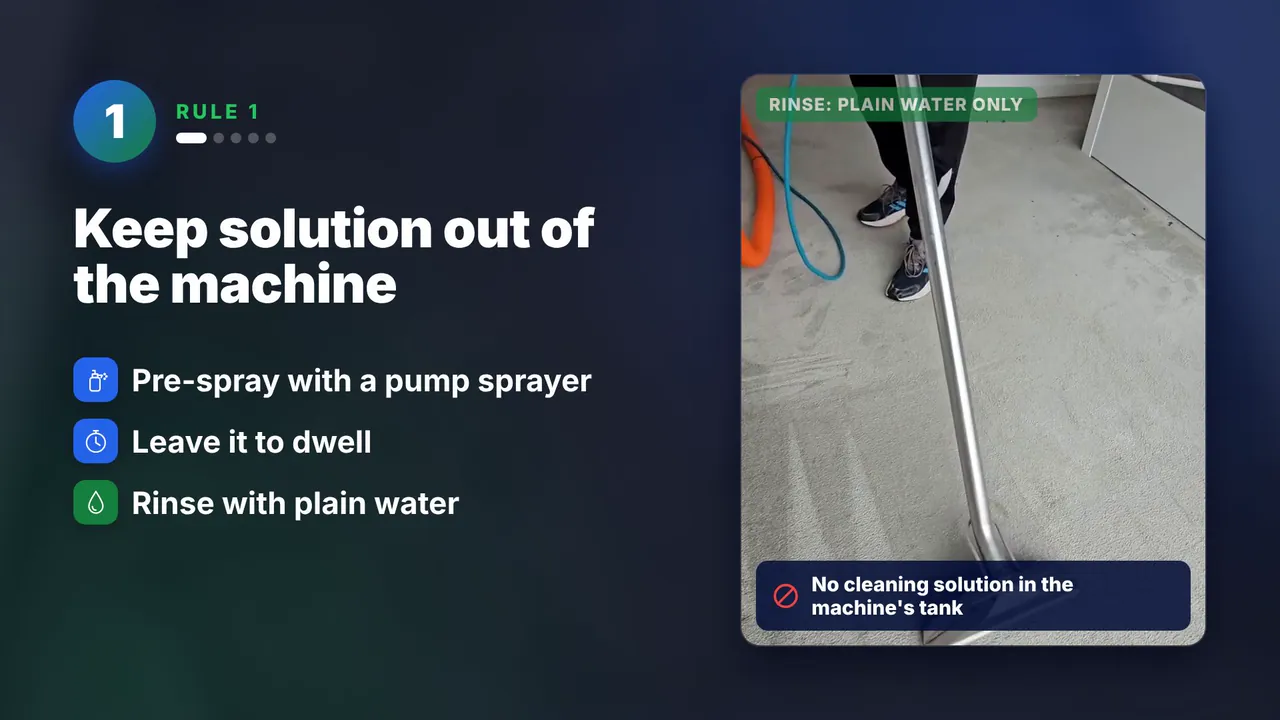
Most home and hire machines have a tank for mixing detergent with the water, and it's tempting to pour the solution in and clean in one go. The trouble is that this spreads detergent across the whole carpet and leaves much of it behind. That soapy residue stays in the fibres and acts like a magnet for dirt, so the carpet looks grubby again within weeks.
How to pre-spray, dwell and rinse
Professionals work the other way round:
- Pre-spray. Mix the solution as the label says, put it in a pump sprayer and mist it evenly over the carpet. Pay extra attention to walkways and marks.
- Let it dwell. Give it the time the label recommends to break down the dirt, and don't let it dry on the carpet.
- Rinse with plain water. Fill the machine with clean water only. The rinse lifts the loosened dirt and the solution out together.
You'll use less product, and your carpet won't be left with soap in it.
Rule 2: Measure the solution as the label says
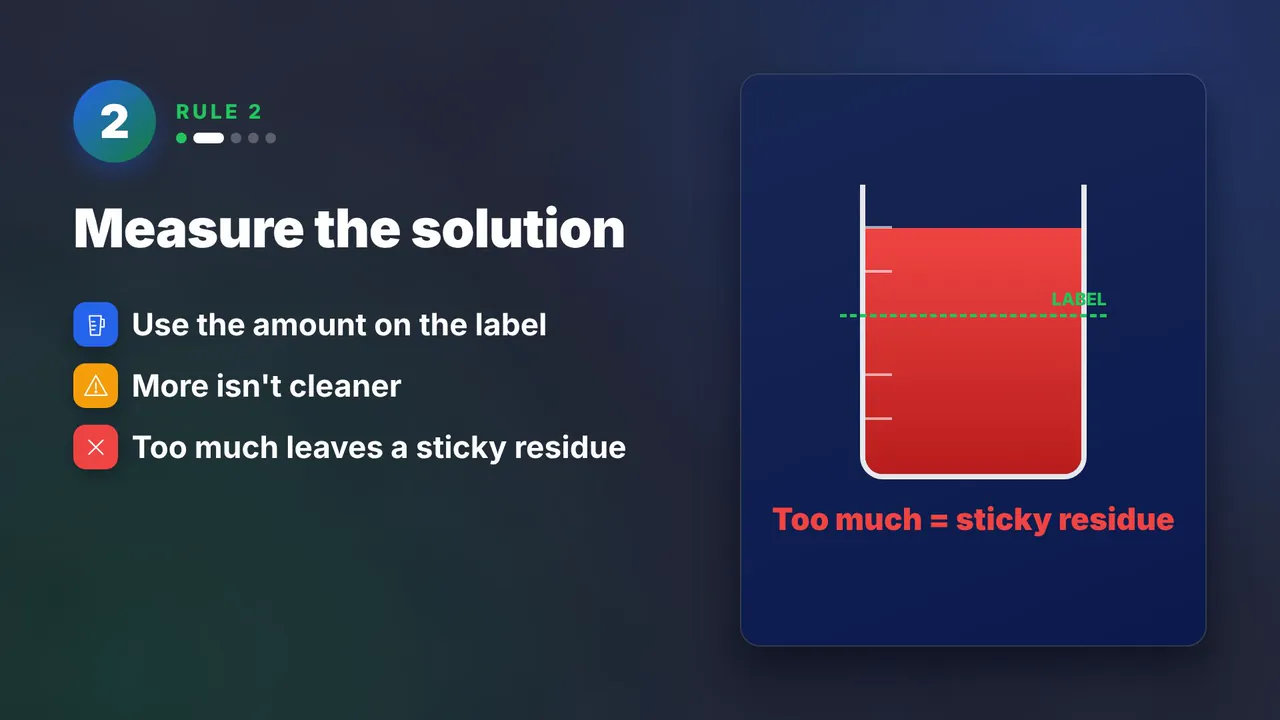
More solution doesn't mean a deeper clean. Cleaning products are made to work at a set strength. Anything above that won't lift more dirt; whatever isn't rinsed out stays in the fibres as a sticky residue. Sticky fibres pick up dirt from shoes and feet faster, so the carpet can look worse a few weeks later than before you cleaned it.
Measure the solution with a jug or the measuring cap, follow the dilution on the label and resist the urge to add "a bit extra" for a dirty patch. If one area is worse than the rest, pre-treat it and give it more dwell time instead. If in doubt, use slightly less rather than more.
Rule 3: Do 3 slow dry passes after every wet pass
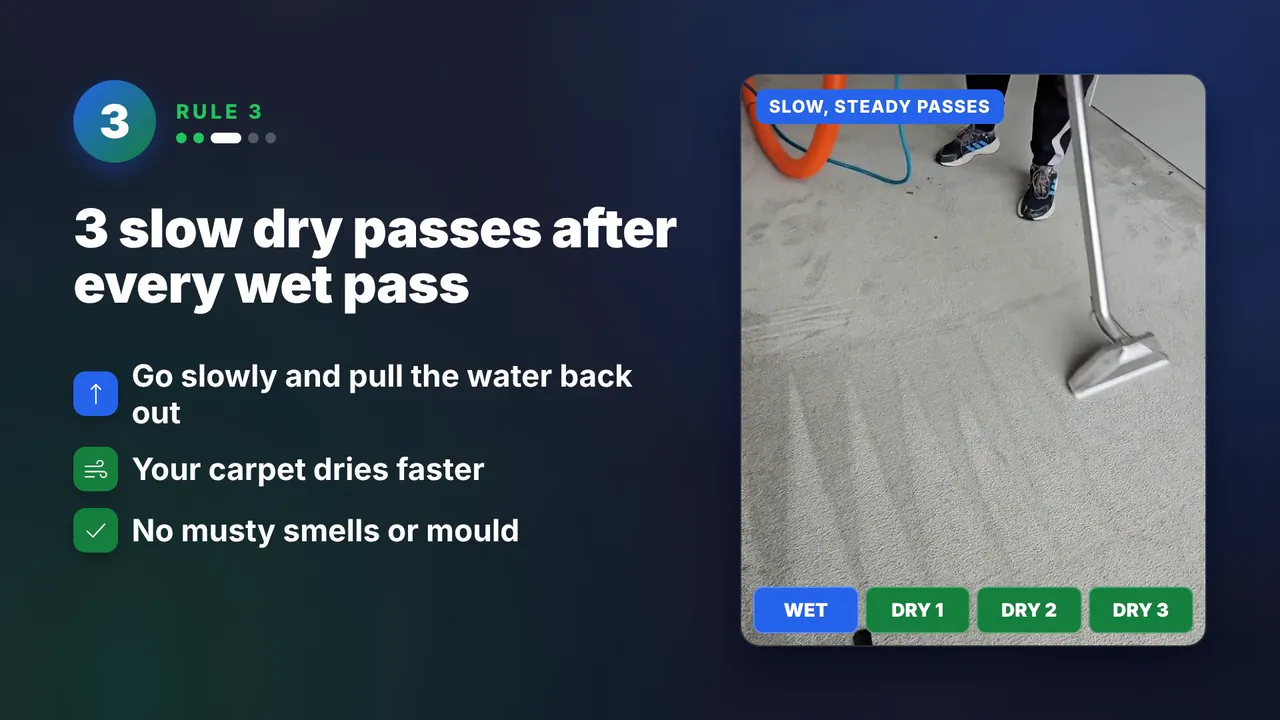
Wet pass vs dry pass
A wet pass is when the machine sprays water into the carpet as you pull it back. A dry pass is the same movement with the spray off, so the machine only sucks. After every wet pass, go back over the same strip three times with the spray off, and move slowly so the suction has time to pull the water back out.
Why it matters
- Faster drying. Less water left behind means hours, not days.
- No musty smells or mould. Carpets and underlay that stay damp for a long time can start to smell, and in bad cases grow mould.
- Fewer marks coming back. Dirt deep in the carpet can wick up to the surface as it dries, so the less water you leave, the less this happens.
A well-extracted carpet should feel damp, not wet. Open the windows or run a fan afterwards, and keep off the carpet until it's dry.
Rule 4: Use hot water (but check the care label)
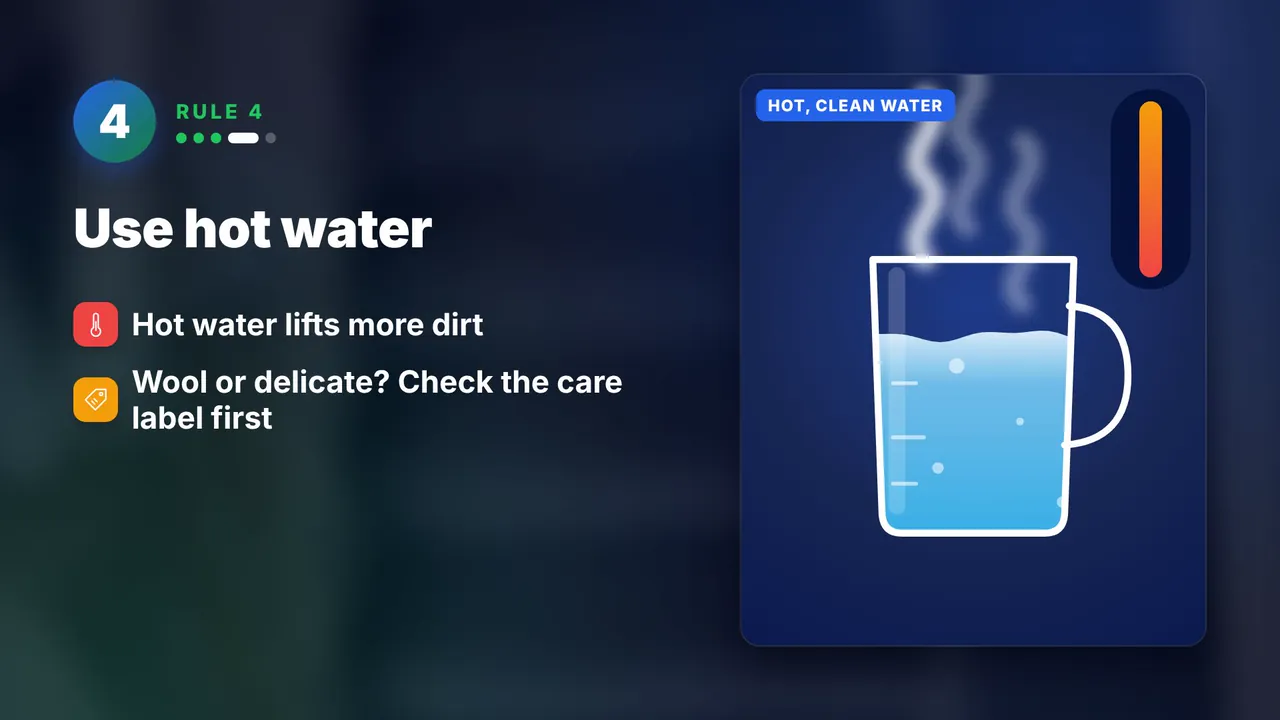
Hot water lifts more dirt and grease than cold, which is why professional machines heat the water. For most synthetic carpets, hot water from the tap is a good place to start. Check your machine's instructions for the hottest water it can take.
Wool or delicate carpet? Check the care label first. Wool and other natural fibres can shrink, fade or go fuzzy with too much heat or water, and some carpets shouldn't be wet-cleaned at all. If there's no label, or you're not sure what your carpet is made of, test a small hidden area first, or ask a professional.
Rule 5: Clean regularly
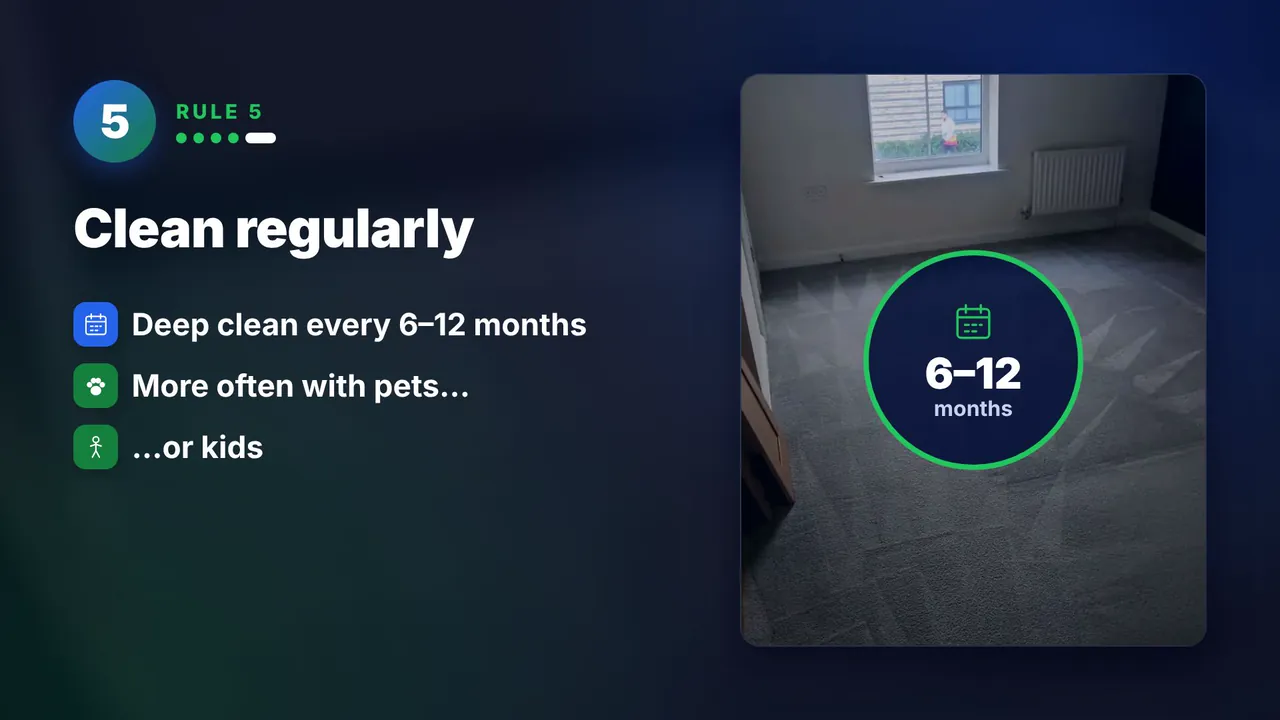
A carpet that's deep cleaned regularly is far easier to clean than one that's been left for years. Built-up dirt is gritty, and it wears the fibres down every time someone walks on it. Keeping dirt levels low makes each clean quicker and more effective, and helps your carpets last longer.
- Deep clean every 6 to 12 months for most homes.
- More often with pets or children, or in busy areas such as hallways and stairs.
- Vacuum often in between, and deal with spills straight away by blotting, not rubbing.
Renting a carpet cleaning machine? Read this first

Hire machines are popular, but they often disappoint:
- They're often worn out. Hire machines are used by lots of people, one after another, and worn brushes, seals and blocked hoses clean less well.
- Weak suction leaves carpets wetter. Hire and home machines are much less powerful than professional extraction machines, so more water stays in the carpet and it takes longer to dry.
- The total cost can be close to a professional clean. Add the hire, the cleaning solution and a day of your time, and the saving is often smaller than it looks.
Before you hire, get a price from an established local carpet cleaner and compare the two. For comparison, SoftLux carpet cleaning starts from £50 per standard bedroom (minimum booking £85), and a two-bedroom flat starts from £190. You can combine rooms and items to reach the minimum. Our London carpet cleaning price guide explains what affects the price.
When to call a professional
DIY cleaning is fine for a routine refresh. It's worth calling a professional when:
- There's pet urine or a lingering smell. Urine soaks into the underlay, where surface cleaning can't reach it. See pet stain and odour removal.
- Stains keep coming back after you've cleaned them, or they're old and set in.
- The carpet or rug is wool, silk or hand-made. These need their colours tested and a gentler method. See rug cleaning.
- You're moving out and need a clean your letting agent will accept, with an invoice. See end of tenancy carpet cleaning.
- It's the stairs, or the whole house. Stairs are slow and awkward with a hire machine. See stair carpet cleaning.
Our carpet cleaning starts with a check of your carpet and pre-treatment of marks, then deep extraction with professional machines. With our Premium Package, carpets are usually dry in 2 to 4 hours, though it can take longer in winter. You don't have to carry a heavy machine up the stairs, and there's no soapy residue left behind. For a free quote, use our quote form or contact us.